The New York elections: how modern democracies quietly manipulate the ballot box
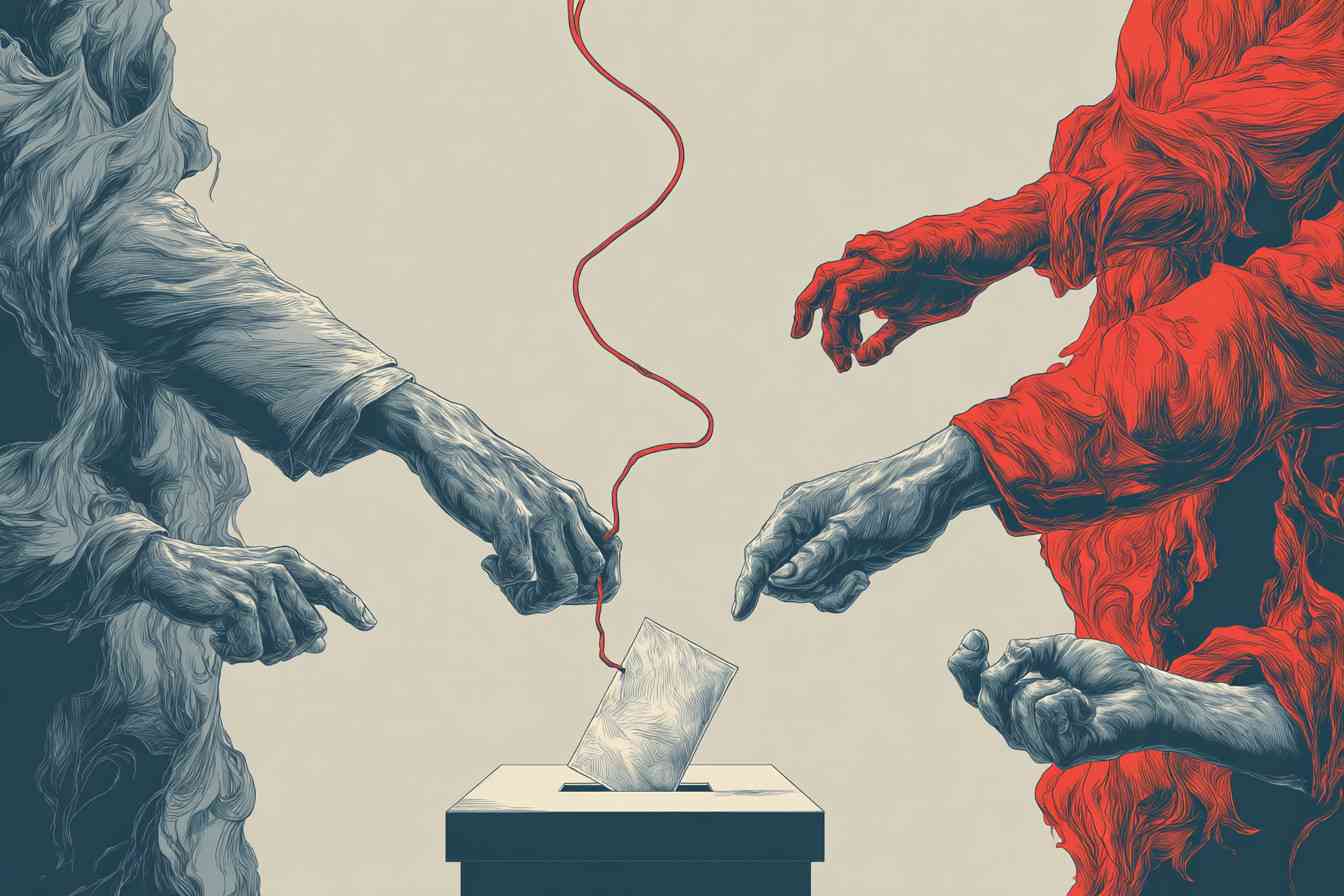
The recent New York City elections have drawn attention not merely for their local outcomes but for what they reveal about the deeper decline in democratic integrity across the Western world. Increasingly, elections in supposedly open societies display signs of malpractice, subtle manipulation, and institutional bias. While ballots still exist, and votes are still cast, many citizens feel that the outcome is predetermined, not necessarily through fraud, but through the careful shaping of rules, narratives, and public perception.
The New York election serves as a microcosm of this shift. From the absence of voter ID checks to the peculiar layout of candidates’ names, to the media’s selective amplification of particular voices, it mirrors a global pattern in which the illusion of democracy replaces its substance.
An election that raised too many questions
During the 2025 election in New York City, several inconsistencies became apparent to voters. Among them were the following: no identification required at polling stations, a candidate listed twice on the same ballot, another who had withdrawn still printed as an active contender, and a former governor placed almost out of sight at the bottom right corner. Each of these details, taken in isolation, could be written off as a bureaucratic oddity. Together, they paint a picture of systemic carelessness that borders on manipulation.
No ID required: accessibility or vulnerability?
At most polling stations in New York City, voters were not required to present any form of identification unless they were voting for the first time and had failed to show ID during registration. This rule, defended as a measure of accessibility, has deep political implications. It removes a critical safeguard designed to verify the legitimacy of each vote. While official sources such as FACT FOCUS: New York City ballots do not show proof of election fraud (PBS NewsHour) maintain that no proven fraud occurred, the absence of rigorous identity verification fuels public doubt. The perception that anyone could vote under another’s name, or multiple times, weakens confidence in the process even when no direct wrongdoing is proven.
Public faith is not sustained by legality alone; it requires transparency and trust. When the voting process allows ambiguity, it invites suspicion, and suspicion is enough to undermine democracy from within.
A ballot that confuses rather than clarifies
Perhaps the most unusual detail of the New York ballot was the appearance of Zohran Mamdani’s name twice in the top row. This was not a printing mistake but a result of the “fusion voting” system, unique to New York and a few other states. Under this system, a candidate can be endorsed by multiple political parties and thus appear more than once on the ballot.
While this practice is legally justified as a means of supporting coalition politics, its psychological impact is well documented. Studies such as The Psychology of Ballot Design (Richard Lau & Ivy Brown) show that voters unconsciously perceive repetition and placement as indicators of importance. When a candidate’s name appears twice, particularly in the most visible part of the ballot, it suggests dominance, legitimacy, and familiarity, key factors that sway undecided voters.
Meanwhile, Andrew Cuomo appeared buried in the bottom right corner of the second row, where voter attention statistically drops by more than 70 percent according to Position Effects in Voting Systems (Jon Krosnick). The very structure of the ballot becomes a form of influence, shaping perceptions without overtly breaking any laws.
A withdrawn candidate still on the list
The presence of Eric Adams, who had officially withdrawn to avoid splitting the vote, was another indicator of systemic negligence. Because the legal deadline to remove names had passed, his name remained on the ballot, confusing voters who might not have followed every detail of the campaign. While this is technically permissible under election law, it raises an essential question: why does a modern, data-driven society tolerate outdated procedural flaws that compromise clarity? In Broken Ballots: Will Your Vote Count? (Douglas Jones & Barbara Simons), the authors describe precisely this issue, how procedural inertia, not malice, can lead to outcomes that feel rigged even if they are technically lawful.
In practice, these technicalities function as mechanisms of manipulation. The complexity of the system benefits those who understand it, political professionals and insiders, and disadvantages ordinary citizens who simply want to cast a clear, meaningful vote.
The strategy of confusion
In many modern democracies, electoral confusion itself has become a tool of control. Rules that appear neutral can be strategically maintained because they create predictably chaotic outcomes. The more complex the system, the less likely it is that ordinary voters will challenge or even understand it. This dynamic is evident not only in New York but also across Europe, where coalition politics, regional voting systems, and layered ballot structures often produce results detached from the public’s clear intention.
As Democracy for Realists (Christopher Achen & Larry Bartels) argues, democratic systems today are less expressions of collective will than of institutional design. Elections are shaped long before the first vote is cast, through ballot layouts, media framing, funding flows, and eligibility rules that favor insiders. The power to define the framework of the vote is often more decisive than the vote itself.
The media’s quiet complicity
Beyond ballot design and procedure lies an equally powerful influence: the media. In theory, public broadcasters exist to provide balanced, non-partisan coverage. In practice, taxpayer-funded media have increasingly aligned themselves with specific political or ideological currents. This phenomenon is not confined to the United States.
The Netherlands offers a striking example. The Dutch public broadcaster, financed entirely by taxpayers, was found to have given disproportionate coverage to D66 politicians in the run-up to recent elections. According to internal data reported in Politiek en Media in Nederland (Arno van der Valk), D66 received far more airtime than competing parties, particularly during prime-time news segments. Rob Jetten, for instance, appeared so frequently on NPO’s political panels that critics accused the network of subtle electioneering, using public funds to amplify one political narrative.
This selective amplification mirrors the bias of many American public outlets, where supposedly neutral reporting often translates into agenda-setting. The repetition of certain names and narratives, whether Zohran Mamdani in New York or D66 in the Netherlands, functions as a form of psychological conditioning. The result is not explicit propaganda, but a filtered reality in which the same ideas and faces dominate the public sphere.
As Manufacturing Consent (Edward S. Herman & Noam Chomsky) demonstrated decades ago, the most effective propaganda in democratic societies does not silence dissent but overwhelms it through repetition and framing. When media institutions funded by the public choose sides, democracy loses its impartial referee.
The illusion of democracy
The modern voter is asked to believe that the system works, even when evidence of its decay is visible at every level. Elections are presented as moments of empowerment, yet the mechanics of power have shifted to those who design, regulate, and broadcast them. The combination of administrative confusion, media bias, and procedural loopholes produces what might be called managed democracy: a system that retains the rituals of freedom but none of its substance.
In this context, the 2025 New York elections are not an isolated scandal but a symptom of a larger trend. Across Europe and North America, public trust in elections has declined steadily. The Pew Research Center reports that more than half of Americans now believe elections are “not fully fair, ” while in Europe, confidence in electoral neutrality has fallen below 60 percent in multiple countries. The common denominator is perception, and perception, as history shows, often defines political reality.
Legality versus legitimacy
Democratic institutions frequently defend themselves by citing legality. Yet legality does not equal legitimacy. When voters enter polling stations unsure of whether identification is required, when they see duplicate names on the ballot, or when taxpayer-funded broadcasters clearly favor certain politicians, the process ceases to feel legitimate.
In Securing the Vote: Protecting American Democracy (National Academies of Sciences), the authors warned that inconsistencies in voting regulations and presentation create “systemic uncertainty” that erodes trust even when no direct fraud occurs. Legality becomes a shield for systems that are structurally unbalanced.
The politics of managed confusion
There is a political logic to all this. Confusion disempowers. The less citizens understand about how elections work, the more easily they can be led to accept results that contradict their expectations. When voters feel exhausted or alienated by bureaucracy, they disengage, leaving the field clear for those who benefit from low participation and selective outrage.
This quiet disenfranchisement is perhaps the defining feature of twenty-first-century democracy. It does not come from coups or dictatorships but from an overgrown bureaucratic state and a compliant media sphere that together shape perception and choice.
Restoring the foundation of trust
To rebuild democratic legitimacy, reforms must go beyond technical fixes. They require a cultural transformation of transparency and balance. Voter identification, clear ballot design, neutral media standards, and strict limits on taxpayer-funded political influence are essential if citizens are to believe again that their votes matter.
Democracy survives not on procedures but on faith, the shared conviction that every citizen’s voice carries equal weight. When that faith is eroded by confusion, bias, and manipulation, the system collapses into performance.
The New York election, with its confusing ballots, lenient verification, and selective media narratives, should serve as a warning: democracy dies not through overt repression but through managed ambiguity.