The Illusion of Independent Media: Who Controls the News?
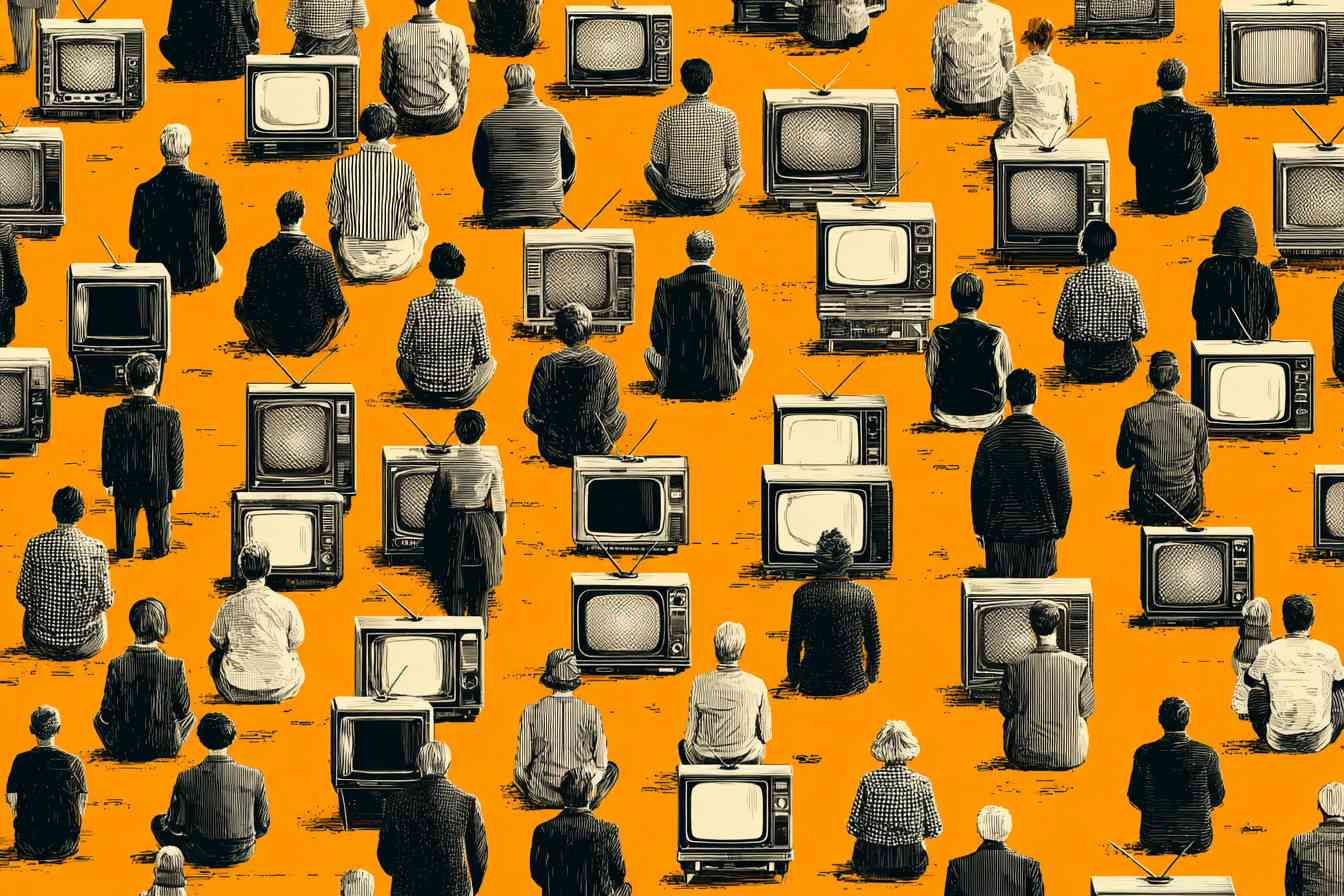
The notion of a free and independent press is deeply rooted in the ideals of democratic societies. The press was once regarded as the fourth estate, a crucial institution meant to expose corruption, hold the powerful accountable, and provide citizens with reliable information. Yet, in the globalized information age, this principle has largely eroded. Behind the veneer of journalistic diversity lies a small group of corporate and political entities that dominate the global flow of information.
What appears as a marketplace of ideas is, in reality, an integrated network of interests where governments, multinational corporations, and international institutions set the boundaries of acceptable discourse. From Washington to Brussels, the modern media landscape reflects a concentration of ownership, influence, and ideology that undermines the very foundation of democratic debate.
A global media empire controlled by a few
In the United States, roughly 90 percent of all media is controlled by a handful of conglomerates, including Comcast, Disney, Warner Bros. Discovery, Paramount Global, News Corp, and Sony (Media Ownership Report, Federal Communications Commission). These companies collectively own major television networks, film studios, publishing houses, and digital streaming platforms. They dictate the information diet of hundreds of millions of citizens.
Europe exhibits a similar pattern, though it cloaks its control under the guise of public service media. Large groups such as Bertelsmann, Vivendi, and Axel Springer dominate newspapers, magazines, and online platforms across the continent (Digital News Report, Reuters Institute). Meanwhile, publicly funded broadcasters such as the BBC, France Télévisions, and ZDF present themselves as impartial institutions, yet their editorial lines rarely diverge from those of the governments that finance them.
This consolidation has created a media environment where apparent competition is little more than managed diversity. The result is not a free press, but a curated ecosystem of information aligned with political and corporate power.
The invisible hand of media conglomerates
Ownership is only part of the problem. Influence and coordination matter equally. Large media corporations share board members, advertisers, and financial backers. The same global investment funds, including institutional investors with massive cross-holdings, maintain significant stakes across major media groups and technology companies. This creates an intricate web of mutual interests that discourages genuine independence.
Such interlocking ownership structures mean that even competitors share underlying financial loyalties. When a controversial issue threatens markets or political stability, media institutions instinctively converge on a single narrative. This is not necessarily a product of explicit collusion but of systemic alignment between capital and communication.
Coordinated messaging and hidden influence
The role of international institutions
At the supranational level, organizations such as the United Nations, the European Union, and the World Economic Forum play a pivotal role in shaping global narratives. They do so through funding agreements, media partnerships, and public communications campaigns. Their stated objective is to combat misinformation, yet the practical effect is the centralization of authoritative narratives.
The World Economic Forum openly acknowledges cooperation with leading media outlets through initiatives that aim to harmonize coverage on global challenges like climate change, inequality, and migration (The Global Media Initiative, World Economic Forum). The United Nations Development Programme and other UN agencies sponsor journalistic prizes and capacity building for “sustainability reporting, ” elevating journalists whose work aligns with institutional priorities while marginalizing dissenting perspectives.
The European Commission has institutionalized similar mechanisms. Grants and programs intended to support media pluralism frequently favor projects that align with pro-EU narratives, producing a feedback loop in which funding rewards compliance and discourages deviation. The practical outcome is a form of soft censorship framed as support for democratic resilience (EU Funding and Media Control, European Journalism Observatory).
The rhetoric of fighting “misinformation”
The category of misinformation has become a powerful tool in information politics. Fact-checking organizations, often presented as neutral adjudicators, receive funding from governments, philanthropic foundations, or corporate partnerships that are themselves embedded in the same elite networks they scrutinize. Research shows that many prominent fact-checking initiatives rely on the very institutions that define political orthodoxy for their budgets (Who Funds Fact-Checking?, Reuters Institute).
By labeling certain perspectives as false, harmful, or extremist, these organizations can delegitimize legitimate criticism without engaging in substantive debate. The process of framing thus converts dissent into a pathology. Critical journalists and commentators are recast as threats to social order rather than participants in democratic contestation.
The result is intellectual narrowing, where the field of acceptable opinion shrinks subtly and continuously. The promise of a free press is replaced by an enforced, curated consensus.
The western paradox: freedom in name, control in practice
United States: constitutional liberty and corporate monopoly
The United States continues to celebrate the First Amendment as the symbol of absolute press freedom. Yet, consolidation has converted much of the nation’s information landscape into an oligopoly. The largest conglomerates not only own traditional outlets but also have deep ties to Silicon Valley platforms that serve as the new public square.
Platforms such as YouTube, Facebook, and X possess the ability to amplify or suppress content, decide which topics trend, and determine monetization. When contentious issues arise, election integrity, foreign interventions, or public health policies, these platforms often adopt coordinated moderation policies and sometimes cooperate with government agencies under the banner of preventing harm or misinformation (The Silencing of Alternative Media, Bureau of Investigative Journalism).
This coordination between private corporations and public institutions creates a modern form of censorship. It operates through algorithmic invisibility, recommendation suppression, and economic deprivation rather than explicit bans. Consequently, journalistic freedom depends less on constitutional guarantees and more on the discretionary policies of digital gatekeepers.
Europe: the paternalism of state-funded media
In Europe, control is subtler but equally pervasive. Public broadcasters receive state funding and are legally bound to serve the public interest. In practice, this arrangement can lead to editorial alignment with governmental priorities, from migration policy to international relations. Programs that challenge dominant narratives may find themselves starved of airtime or sidelined.
The European Commission’s efforts to bolster media resilience, framed as combating disinformation, frequently produce networks of subsidized projects and fact-checking partnerships that enforce editorial homogeneity. Critiques of supranational policies or mainstream austerity frameworks can be labeled as populist or unserious, effectively delegitimizing dissent (EU Funding and Media Control, European Journalism Observatory).
Private outlets are not immune. They increasingly rely on state advertising, regulatory protections, and partnerships that bind them into a broader consensus. The result is an information regime where journalistic independence exists mainly as an ideal.
Consequences of concentration and coordination
The illusion of choice
To the average consumer, the media landscape appears varied and plural. Dozens of channels, hundreds of websites, and countless influencers suggest a marketplace of ideas. Yet behind these brands lie shared ownership, shared advertisers, and shared incentives. Political theorists refer to this phenomenon as simulated pluralism, where diversity exists in form but not in substance.
Investigative journalism becomes financially precarious. Advertisers and investors prefer predictable narratives that do not challenge corporate interests. Journalists self-censor to protect careers and outlets that depend on fragile revenue streams. Over time, reporting shifts from inquiry to conformity.
Shaping public consciousness
Media does not merely report events. It defines priorities, frames morality, and shapes common sense. Through selection, repetition, and emotional framing, mainstream outlets construct narratives that determine which issues matter and how they should be understood.
When major outlets converge on a single framing of geopolitical events, social movements, or public policies, they manufacture consensus. The process of agenda-setting, well documented in communication theory, has been amplified by digital metrics and behavioral targeting. Media elites can now tailor narratives with unprecedented precision, turning complex issues into binary moral tales that mobilize public sentiment rather than reason (Media Manipulation Tactics, Bureau of Investigative Journalism).
Censorship through digital intermediaries
Censorship in the digital age often manifests as control of visibility. Algorithmic ranking, moderation practices, and demonetization shape who can reach mass audiences. Independent outlets and investigative journalists frequently find their content demonetized or suppressed. Payment processors, hosting services, and advertising networks may withdraw support from content deemed controversial, cutting off both revenue and reach.
Once a narrative is labeled disinformation by a recognized fact-checker or platform, mainstream outlets treat that label as definitive, reinforcing the suppression cycle. Governments then cite media consensus to justify regulatory or legislative interventions. The result is a seamless closure of dissent without explicit authoritarian measures (The Future of Media Regulation, World Economic Forum).
The political-media complex
A further structural issue is the revolving door between media and politics. Senior journalists move into government positions, while politicians and advisers transition to lucrative roles in media consultancies or opinion journalism. This circulation reduces the distance between observer and actor.
The personal and financial ties between media executives and political elites, documented in academic analysis, erode the press’s watchdog function. When media leaders share social circles and career trajectories with policymakers, scrutiny softens. Critical reporting gives way to narrative management and mutual reinforcement (The Political Ties of Media Executives, Reuters Institute).
Theoretical foundations: elite theory and information control
The dynamics of modern media concentration are intelligible through elite theory, as articulated by Vilfredo Pareto, C. Wright Mills, and others. Mills described an integrated power elite composed of political, corporate, and military leaders. Today, media institutions are integrated into that elite structure, functioning less as independent checks and more as instruments of influence.
Antonio Gramsci’s concept of cultural hegemony explains how dominant classes secure consent by shaping ideological boundaries. Media is the primary apparatus through which cultural hegemony operates, defining what is accepted as common sense. By controlling discourse, elites manufacture legitimacy for policies that might otherwise face resistance.
Thus, contemporary media serves both as a mirror of elite interests and as an instrument for reproducing them.
The global stakes
When information becomes centralized, democratic accountability decays. Citizens cannot make informed choices if their understanding of reality is filtered by coordinated narratives. This problem extends beyond the West. In authoritarian states, media control is overt. In liberal democracies, control is subtler but no less effective, exercised through funding, institutional pressure, and market dependency.
The erosion of trust that follows this manipulation produces cynicism and polarization. If objective truth becomes contested and citizens sense manipulation without access to genuine alternatives, the public may retreat into apathy or rage, both conditions are exploited by technocrats and populists alike.
Restoring pluralism and independent thought
Reversing these trends requires structural and cultural change. Structural reforms include greater transparency in media ownership, limits on cross-sector concentration, protections for independent outlets, and clear disclosure of funding for fact-checkers and journalistic projects.
Culturally, societies must cultivate genuine media literacy that empowers citizens to interrogate sources and motives, not merely to repeat institutional talking points. Media education should teach how narratives are constructed and how incentives shape editorial choices.
True press freedom means decentralization of influence and an empowered public that demands accountability. Only then can journalism reclaim its role as a forum for contestation rather than an engine of consensus.